“No.”
“They’re writing it like I ordered the recovery.”
“You didn’t.”
“They’re writing you out.”
I shrugged.
That hurt, too.
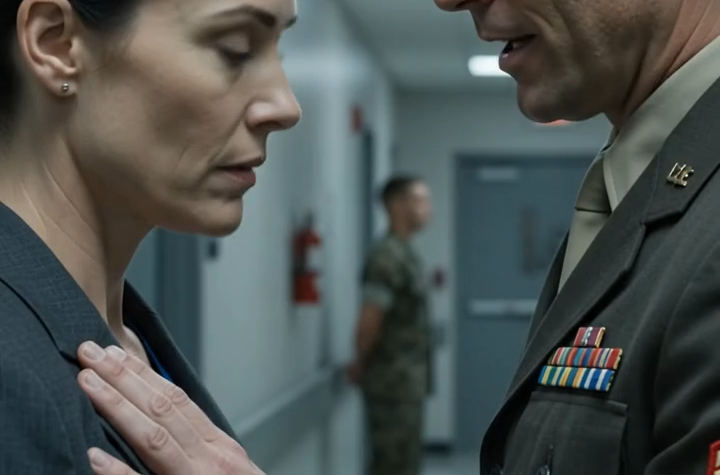
Mercer stared at me as if I had lost my mind.
“You saved my life.”
“I did my job.”
“You disobeyed a direct instruction.”
“Apparently the report disagrees.”
He didn’t smile.
“I’ll file a statement.”
“And then what?” I asked.
“The truth is on record.”
“The truth is already in that room with everybody who was there.”
“That’s not enough.”
He was young then.
Angry.
Still convinced that if you pushed hard enough against a machine, the machine would admit where it had gone wrong.
I had been in longer.
I knew how easily a junior lieutenant could be turned into the problem he was trying to expose.
I also knew men had made mistakes that day.
Serious ones.
But I did not want the soldiers beneath them dragged through months of accusations so somebody could build a cleaner career out of blame.
What I wanted was simpler.
I wanted Mercer to remember.
I pulled the Raven band from my wrist.
The leather was still nearly black then.
I held it up.
“You’ve still got yours?”
He touched his wrist.
“Yeah.”
“Then promise me something.”
His expression changed.
“What?”
“If you ever get high enough that telling the truth doesn’t destroy the people below you, tell it clean.”
He stared at me.
“No speech.
No hero story.
Just what happened.”
“I promise.”
I put the band back on.
Then I added one more thing.
“And don’t ever make my family carry this for me.”
Mercer frowned.
I had a little girl at home.
Emma.
Back then she knew the Army mostly as the reason her father disappeared for long stretches and came home moving more slowly.
“If she ever chooses this life,” I told him, “she gets to choose it because it’s hers.
Not because somebody turned me into a story she has to live up to.”
Mercer nodded.
“Understood.”
That was the promise.
Not that he would make me famous.
Not that he would find me a medal.