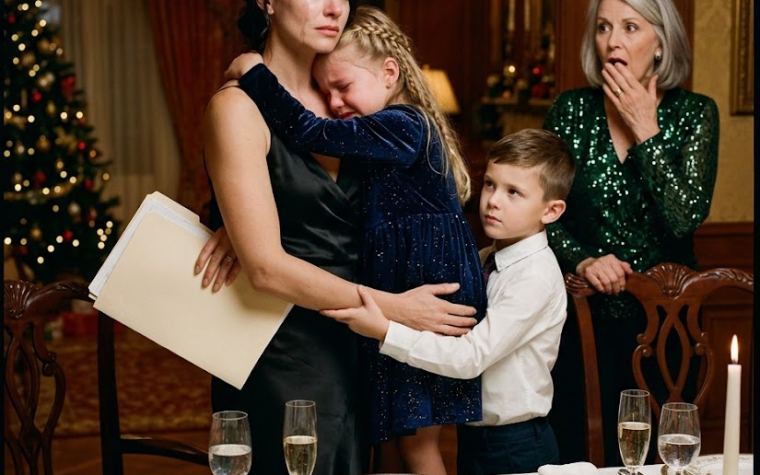
The executive director went pale because Daniel Whitmore’s name appeared on the warehouse lease.
Not as a donor.
As the owner.
Whitmore Logistics had acquired the industrial property years earlier, when Daniel and his late wife, Sarah, were buying neglected buildings near the interstate and offering them to local nonprofits at symbolic rents.
Sarah had believed empty warehouses should hold food, beds, and medicine instead of dust.
After her death, Daniel had left most of the program to his foundation’s committees.
HopeBridge Family Relief had requested the building as a donation-sorting center.
The board had approved the lease.
Daniel had signed it without visiting the site.
The rent was one dollar a year.
The lease described the building as unoccupied after seven in the evening.
It also gave Whitmore Logistics emergency access whenever there was evidence of danger, unlawful activity, or unauthorized residential use.
Daniel closed the folder and looked at the executive director.
“You told our foundation this warehouse was empty at night.”
The director recovered quickly.
Men like him often did.
His face rearranged itself into professional concern.
“It is empty.
The child is confused.”
The girl tightened her hand around Daniel’s sleeve.
The paramedic had placed a temporary splint around her broken arm.
She had finally allowed the baby to be transferred onto a warm stretcher, but she remained close enough to keep one hand on the pink blanket.
Daniel crouched beside her.
“What is your name?”
“Maya.”
“And your sister?”
“Nora.”
“Where is your mother, Maya?”
The girl looked toward the warehouses.
“Room fourteen.”
The director stepped forward.
“Officer, this conversation needs to stop.
That child has experienced severe instability.
HopeBridge has legal responsibility for her until the county can arrange placement.”
The state trooper turned toward him.
“Do you have an order granting you custody?”
“Our legal department has the documentation.”
“Do you have it with you?”
“No, but—”
“Then keep your hands where I can see them and stay away from the children.”
The director’s mouth hardened.
He looked at Daniel as though the two men shared an understanding that should have placed them above everyone else on the shoulder.
They had eaten at the same table that evening.
They had shaken hands beneath chandeliers.
The director had thanked Daniel publicly for his generosity.
Now he lowered his voice.
“You don’t understand what you’re interfering with.”
Daniel glanced at Maya’s bleeding feet.
“I’m beginning to.”
The baby was struggling to breathe comfortably, and the paramedics needed to leave for the hospital.
Maya refused to go unless someone found her mother.
Daniel did not promise what he could not guarantee.
He told her the baby needed a doctor, and he told her the trooper would go to the warehouse immediately.
Maya shook her head.
“They’ll move Mama.”
The director reacted before anyone else did.