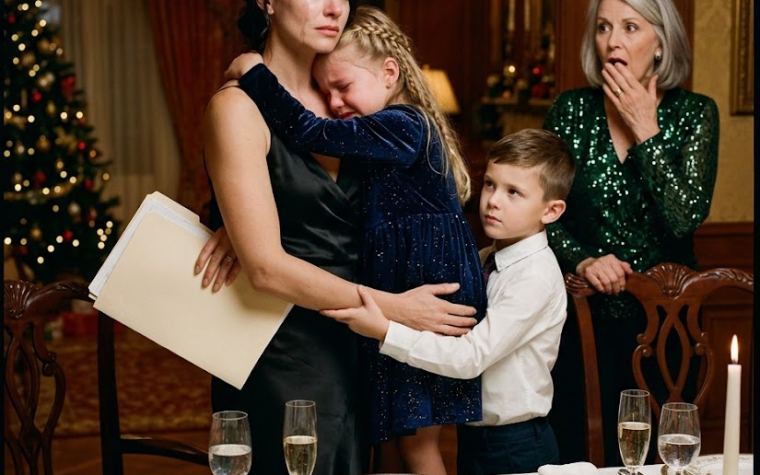
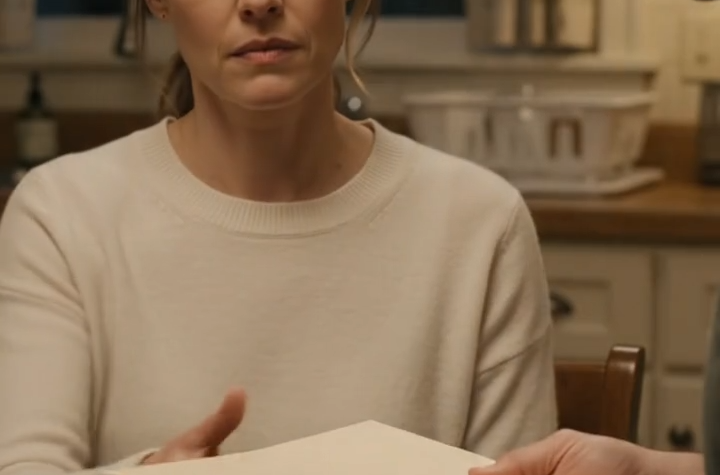
Jennifer’s name glowed on the screen while the cemetery receipt lay beneath my hand.
For three days, I had been told she was dead.
I had knelt beside a headstone carrying her name.
I had touched soil Walter wanted me to believe covered her body.
Now my wife was calling me.
I answered before the second ring ended.
“Jennifer?”
For a moment, all I heard was breathing.
Then came a small, broken sound I recognized immediately—the sound she made when she was trying not to cry in front of someone.
“John,” she whispered.
“What are you doing with my life?”
The question hurt more than Walter’s cruelty because Jennifer sounded afraid of me.
“I don’t understand.”
“They said you signed everything.
They said you didn’t want me home.”
“Who said that?”
“Walter.
Olivia too, at first.
They showed me papers with your name.
They said you had suffered some kind of breakdown and that you were selling the house.”
I looked at the forged home-equity application on the table.
“Jennifer, listen carefully.
I signed nothing.
Walter told me you were dead.”
The line went silent.
Then she inhaled sharply.
“He told you what?”
“He said you were buried at Meadowbrook Cemetery.
There is a headstone with your name on it.”
Jennifer began to cry openly.
I gripped the edge of the table and forced my voice to remain steady.
“Where are you?”
“A recovery center.
Cedar Glen, I think.
They took my phone when I arrived because Walter said calls agitated me.
A nurse let me use hers after I told her something was wrong.”
“Are you safe?”
“I don’t know.”
A door opened on her end.
Jennifer’s voice dropped.
“Walter comes every afternoon with more documents.
He wants me to sign a trust amendment.
He says it will protect Olivia if you become unstable.”
“Do not sign anything.”
“I haven’t.
But, John, one page already had my initials on it.
They weren’t mine.”
The fear inside me hardened into something cleaner.
“Give the phone back to the nurse.”
A woman came on the line.
I explained that I was Jennifer’s husband, that I had marriage records, medical records, and evidence of forged signatures.
The nurse would not disclose details, but her tone changed when I mentioned the false grave.
“Mr.
Harrison,” she said carefully, “your wife was admitted under a temporary private-care authorization.
The paperwork identifies her daughter and son-in-law as the approved contacts.”
“Who excluded me?”